Decoding NFT Metadata: The Science Behind Digital Art Ownership

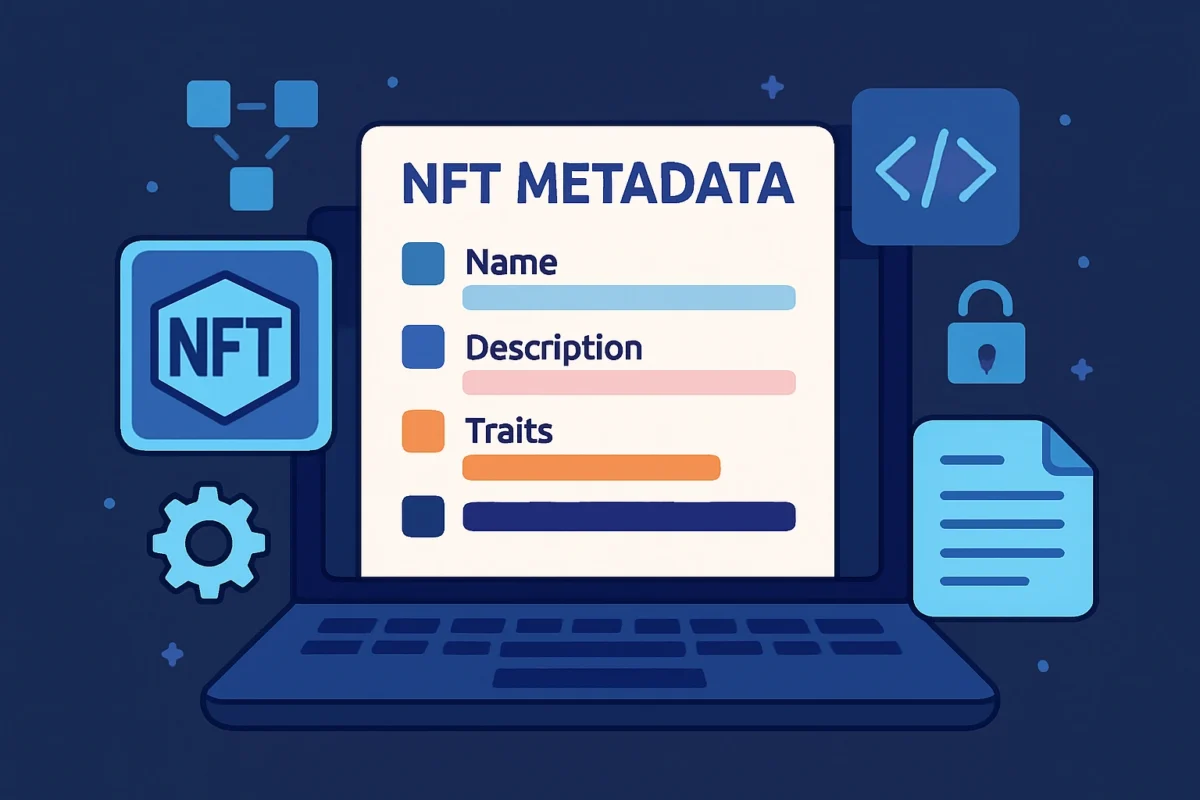
It’s easy to dismiss NFTs as just fancy digital pictures, but their real substance is hidden. Behind every trade, sale, and collectible is an invisible information layer or metadata that gives the NFT its entire identity, rarity profile, history, and true value on the blockchain. You could say NFT metadata is the unique DNA of a digital asset.
It’s what defines the art, who the creator is, which traits it possesses and how rare they are, and the instructions for displaying it. Without it, an NFT is literally just a random file without any context or verifiable history. Ultimately, in the world of digital art, metadata is the foundation upon which ownership is built.
What Is NFT Metadata?
NFT metadata is structured information that describes the digital asset an NFT represents. It usually contains:
- Artwork title and description
- Creator details
- Visual traits or attributes
- Edition or rarity numbers
- File type and dimensions
- External links or unlockable content
Because NFTs are built on blockchain standards, NFT metadata is formatted consistently. For example, the ERC-721 and ERC-1155 token standards define how metadata is stored and referenced.
Metadata acts like a certificate of authenticity. As a result, it proves you own a specific digital item with specific characteristics.
Why Metadata Matters in Digital Art Ownership
Traditional image files can be copied endlessly. But metadata on a blockchain creates something new: verifiable scarcity.
It brings transparency to:
- Ownership history
- Provenance
- Trait rarity
- Authenticity
These factors shape digital art valuation. A collector can verify if an item is truly unique, or just a look-alike. Without metadata, NFTs would lose their meaning.
Also See: Exploring NFT Artistic Creations: A New Digital Era
How Metadata Lives on the Blockchain
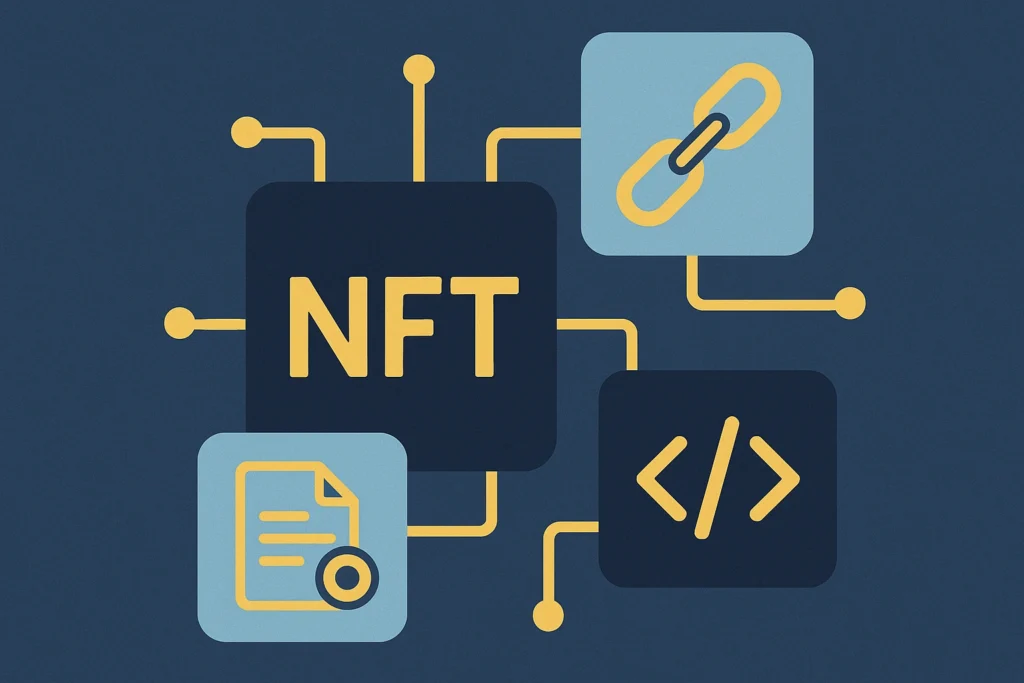
Here’s the interesting part. The full artwork file doesn’t always live directly on the blockchain. Instead, the blockchain stores a metadata pointer which is a link to where the file is hosted.
Common storage methods include:
1. On-Chain Metadata
All metadata is stored directly in blockchain code. It is:
- Fully decentralized
- Permanent
- Tamper-resistant
One thing to note is that on-chain storage is expensive.
2. Off-Chain Metadata
Data is hosted on external servers. As a result, it becomes cheaper and faster. But it depends on a server staying online.
3. Hybrid Storage
Hybrid is parts on-chain and parts off-chain. It has a balanced approach, more affordable and offers flexible updates
As a result, projects use this approach to keep essential information permanent, while storing heavy artwork files elsewhere.
IPFS: The Backbone of NFT Storage
One of the most popular solutions is the InterPlanetary File System (IPFS). It stores data across a network of distributed computers instead of a single server.
Benefits:
- Harder to delete
- Resistant to corruption
- Community-driven
Files on IPFS get a unique content identifier (CID). So, if the file changes, the CID changes. As a result, that makes tampering obvious.
Rarity and Valuation through Metadata
Beyond simple description, the attributes section of the metadata is the economic engine that drives digital art valuation within large collections.
1. The Traits System
Collectible NFT projects like PFP collections use traits to establish artificial scarcity, a key element of the NFT coding.
- Encoding: The attributes array lists features like headwear, background color, clothing, etc. The frequency of these traits across the entire collection is calculated.
- Rarity Scoring: Specialized metadata decoding tools use complex statistical formulas (often a blend of mean rarity score and statistical rarity) to assign a single Rarity Score to each NFT.
- Valuation: This score is the primary non-subjective metric used by marketplaces and investors to set the floor price of a specific NFT relative to others in the same collection.
2. Dynamic Metadata and Utility
A newer, more complex form of blockchain metadata is dynamic metadata, which changes over time based on real-world or on-chain events.
- Mechanism: Instead of pointing to a static JSON file, the TokenURI points to an API endpoint (a server) controlled by the creator. As a result, the API references the NFT’s unique Token ID and returns a new JSON file with updated attributes. For example, If an NFT character “levels up” in a game, the API updates the metadata to reflect “Level 2,” which changes the artwork (the image link) and the attributes.
- Implication: This introduces a potential trust dependency (the API is centralized), but it is essential for delivering utility and maintaining player digital art ownership in dynamic metaverses and games.
NFT Metadata Risks to Watch
Metadata brings the power of digital ownership. But it can introduce vulnerabilities if handled poorly like:
1. Hosting Failure
If off-chain servers go offline, the NFT’s artwork can disappear even if the token remains.
2. Centralized Updates
Creators could alter attributes after minting, changing rarity.
3. Broken Links
URLs in metadata can expire or move.
FAQ: NFT Metadata
Where is NFT metadata stored?
It can be on-chain, off-chain, on IPFS, or in hybrid systems.
Can metadata be changed after minting?
Only if the project allows dynamic updates by design.
Does metadata affect NFT value?
Yes. Traits, rarity, and provenance influence pricing.
What happens if metadata breaks?
Marketplaces may fail to display the artwork or traits.
Can metadata prove ownership?
Yes. Blockchain records make ownership transparent and permanent.
Conclusion
Ultimately, metadata is the quiet powerhouse behind the NFT revolution. It’s the data that fundamentally defines a piece of digital art establishing its unique characteristics, calculating its rarity, and unequivocally proving ownership. If you remove the metadata, an NFT loses its identity, its purpose, and all its cultural significance.
As we move toward a future defined by digital ownership, this data becomes increasingly central to our online existence. It dictates value, confers status, and controls access within emerging virtual economies. Therefore, understanding this invisible data layer is much more than technical expertise; it’s a necessary component of financial literacy for the digital age.