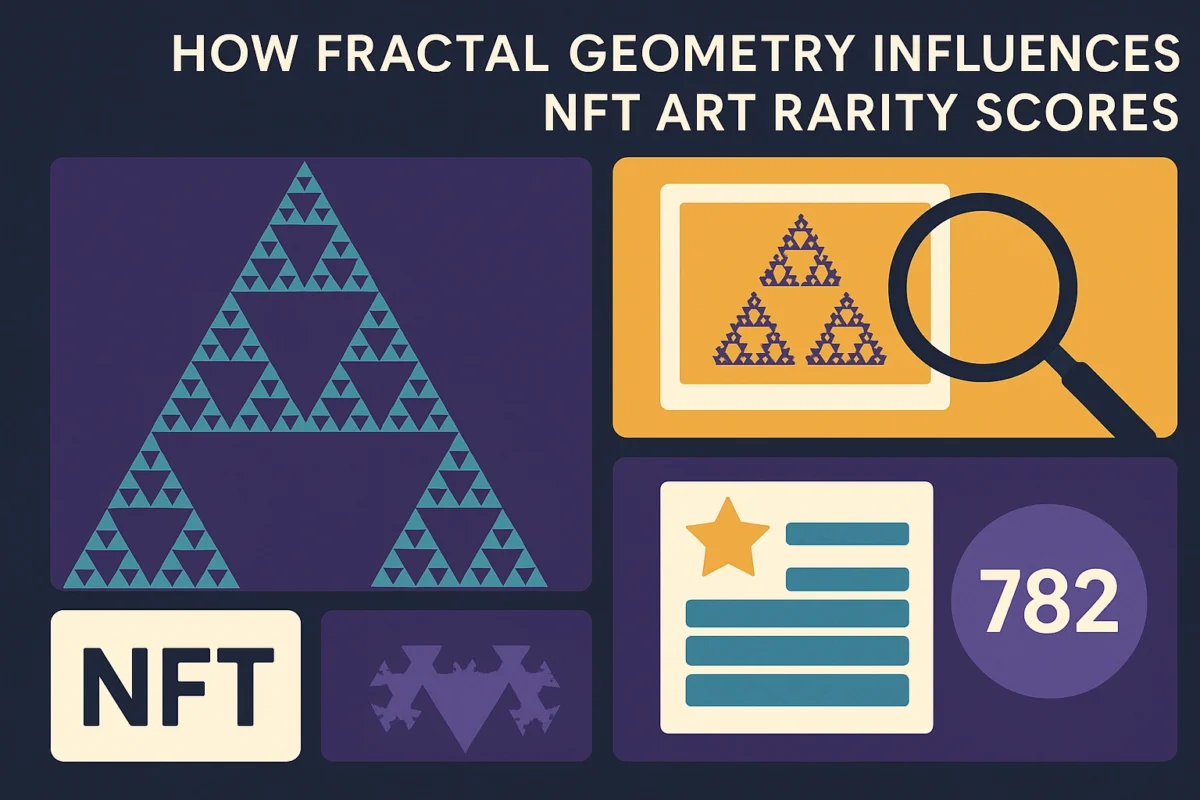
How Fractal Geometry Influences NFT Art Rarity Scores

If you’re into NFTs, you’ve probably asked the big question: ‘How rare is this thing?’ While some art NFTs are truly one-of-a-kind, most are part of huge collections, often with thousands of unique pieces. To figure out what an NFT is worth, people often look at NFT rarity score, which tells you how unique it is within its collection. The usual way to calculate this is just to count the traits, but a much smarter method is starting to appear. This new approach uses fractal geometry. 

Fractal geometry are those intricate, self-repeating patterns you see in nature and math which is used to get a deeper, more accurate measure of rarity. It’s totally changing how we value and predict the future of NFT art.

Let’s see how fractal geometry is influencing NFT rarity scores.

The Basics of NFT Rarity Scoring

NFT rarity is the backbone of NFT valuation. Collections like CryptoPunks or Bored Ape Yacht Club rise in price not only because of cultural hype but also due to algorithmic scarcity.

Common NFT rarity metrics include:

  • Trait frequency: How often visual elements (like hats, colors, or backgrounds) appear.
  • Combination rarity: The uniqueness of multiple traits combined.
  • Metadata weight: Attributes embedded in the blockchain smart contract.
  • Statistical probability: The chance of a token having a certain combination of features.

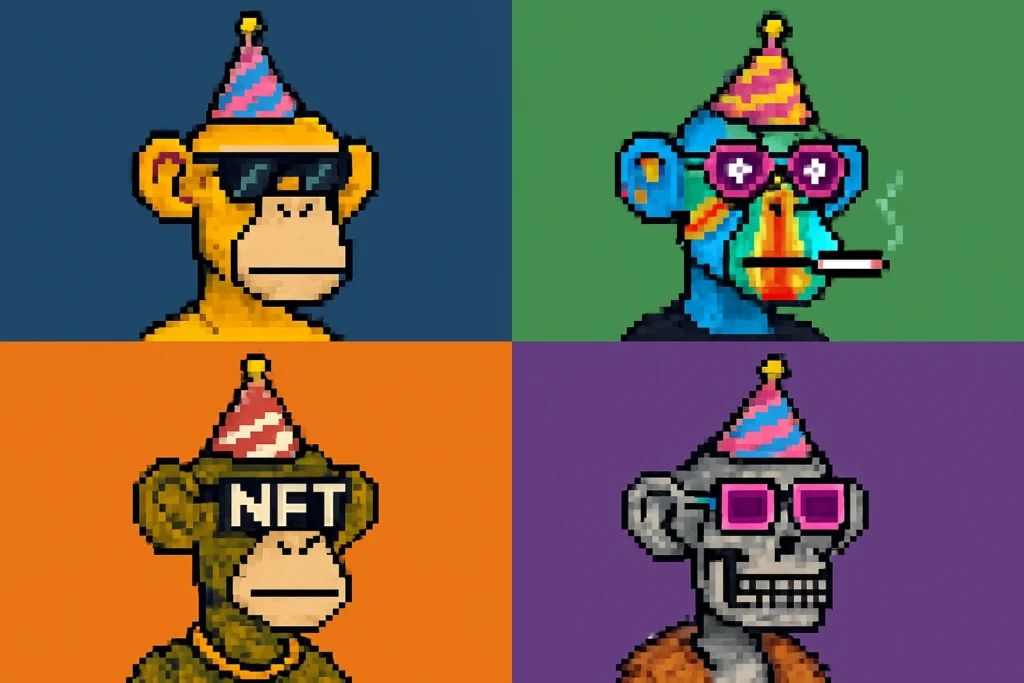
The current standard for NFT art rarity scoring is trait counting. This method involves listing all the traits of an NFT (e.g., a monkey’s hat, eyes, and fur color) and then calculating the statistical rarity of each trait within the collection. The final score is typically a sum or product of these individual rarity percentages. 

For example, in a collection of 10,000 NFTs: 

  • Trait: Gold Hat (occurs 100 times) -> Rarity = 1% 
  • Trait: Laser Eyes (occurs 50 times) -> Rarity = 0.5% 
  • Trait: Blue Fur (occurs 200 times) -> Rarity = 2% 

A rare NFT scoring tool would then calculate a total score based on these percentages. While this method is straightforward, it has a major flaw: it treats all traits as independent, even when they are not. It fails to capture the complexity and visual uniqueness that arises from the relationship between traits. 

For example, a “Gold Hat” might be common, but the combination of a “Gold Hat” with “Laser Eyes” might create a visually stunning and unique piece that the simple counting system undervalues. This is where fractal geometry provides a more nuanced and accurate solution.

Also See: NFT Energy Efficiency & Blockchain Physics

Fractal Geometry: A Natural Fit for NFT Art

about  fractal NFTs

Fractals are mathematical shapes that repeat endlessly at different scales. Think of snowflakes, coastlines, and tree branches. Their beauty lies in self-similarity like patterns that look similar whether zoomed in or out.

In the NFT art world:

  • Generative artists use fractal algorithms to design infinitely complex visuals.
  • Collectors see fractals as symbolic of uniqueness and mathematical beauty.
  • Scoring models can apply fractal measures to calculate rarity beyond simple traits.

Fractals provide a deeper, more objective measure of uniqueness, making them ideal for digital rarity systems that want to move past surface-level aesthetics.

How Fractal Geometry Works

The core of this advanced system lies in a new set of NFT math models that analyze the visual data embedded in an NFT’s image. This process involves several key steps: 

Image Analysis

The model first converts the NFT’s image into a numerical format, essentially a grid of pixel data. 

Fractal Dimension Calculation

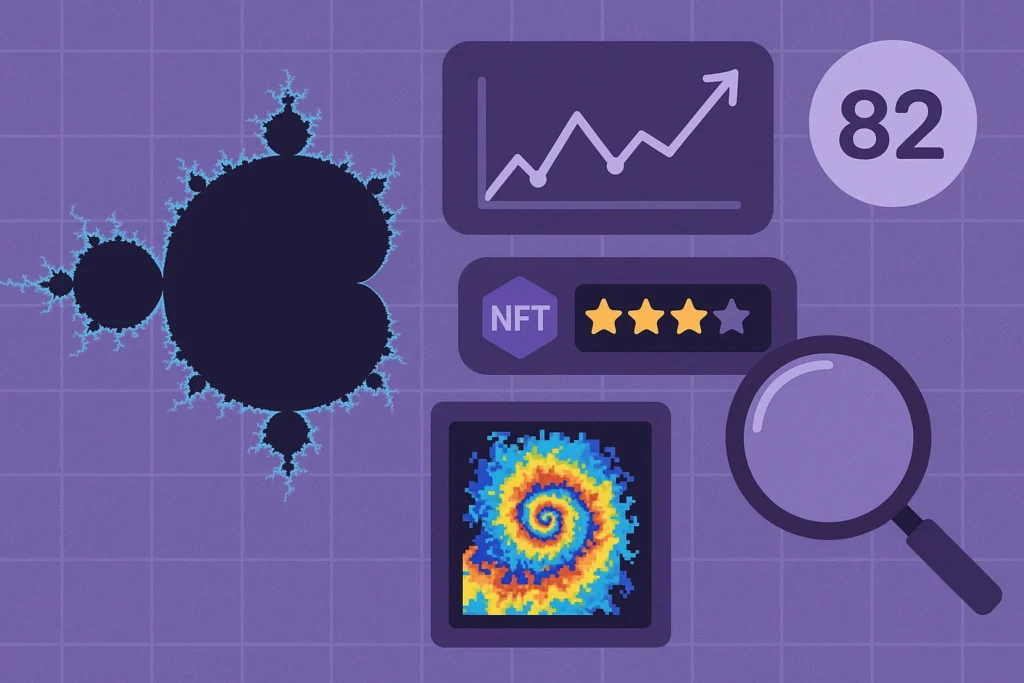
This is the crucial step. Instead of a traditional geometric dimension (e.g., a line is 1D, a square is 2D), a fractal dimension is a non-integer value that quantifies the complexity of a pattern. A higher fractal dimension indicates a more intricate, complex, and unique visual pattern. For example, a simple, blocky piece of art would have a low fractal dimension, while a piece with swirling, intricate patterns would have a high one. 

Self-Similarity Metrics

Algorithms are used to measure the degree of self-similarity within the NFT’s art. A piece that contains many repeating, scaled-down versions of its own patterns is considered to have a high self-similarity score, which can be a key indicator of its unique visual structure. 

Aesthetic Scoring

The model can be trained on a dataset of visually appealing art to develop an aesthetic score. This moves beyond pure rarity to quantify visual appeal, a critical but subjective part of NFT valuation techniques. 

By calculating these metrics from the image itself, the model can assign a geometry NFT ranking that is far more accurate and meaningful than a simple rarity score. It measures the intrinsic, visual uniqueness of the art, not just the statistical rarity of its components.

Why Fractals Improves NFT Valuation Techniques

Traditional rarity relies on scarcity of traits, but that doesn’t always capture visual or mathematical uniqueness. Fractals add another layer by:

  • Measuring complexity and symmetry mathematically.
  • Offering a scientific rarity baseline across collections.
  • Enabling cross-collection rarity comparisons (e.g., comparing fractal values between two different NFT projects).

As a result, this elevates blockchain art value from just popularity-driven hype to data-backed rarity scores.

Digital Rarity Systems and Fractal Integration

what is NFT math models

Modern rarity platforms are already experimenting with advanced NFT metadata fractals. By encoding fractal signatures into smart contracts, rarity models become more sophisticated.

A digital rarity system enhanced with fractals could:

  • Score NFTs based on fractal dimensions + metadata traits.
  • Use geometry ranking systems to adjust rarity dynamically.
  • Feed insights into NFT marketplace trends, giving collectors new valuation tools.

This transforms rarity scoring from static trait counts to living mathematical models.

The Psychology of Fractal Rarity

Why do collectors value fractals so highly? Psychology offers answers:

Cognitive aesthetics: The brain finds fractal patterns pleasing because they resemble nature.

Emotional value: Fractal NFTs trigger a sense of infinity, wonder, and balance.

Memory anchoring: Just as fractals repeat endlessly, collectors anchor memories to ownership, enhancing NFT psychology.

In short, fractals tap into deep cognitive preferences, making them a natural driver of NFT investor behavior.

Real-World Applications of Fractal NFTs

Generative Art Projects

  • Artists like those in Art Blocks use fractal algorithms to generate unique pieces.
  • Rarity scoring could integrate fractal metrics for fairer valuation.

NFT Marketplaces

  • Platforms could display fractal scores alongside rarity charts which will help investors with NFT math models instead of surface-level analytics.

Collector Tools

  • Smart apps could let users upload an NFT and see its fractal dimension ranking which will democratize NFT art prediction and valuation.

Challenges of Fractal-Based Rarity

Computational intensity: Calculating fractal dimensions for large collections takes power.

Collector education: Many investors don’t understand fractals, so tools must simplify outputs.

Over-standardization risk: If all rarity systems adopt fractals, the novelty factor may decline.

Yet, these challenges can be solved with user-friendly NFT valuation techniques that balance math with accessibility.

Also See: The Neuroscience of Digital Ownership: Why NFTs Matter

Future of NFT Rarity: From Traits to Math

The shift to fractal-based rarity has major implications for NFT art prediction. By providing a more accurate measure of intrinsic artistic value, it can help stabilize the market and move it away from a purely speculative bubble. Art that is mathematically unique and visually complex is more likely to hold long-term value than a piece whose “rarity” is simply a statistical fluke. 

Plus, this method can be used as a powerful NFT valuation technique. By analyzing an artist’s portfolio, a model can identify the traits and patterns that are most likely to correlate with market success and high resale value. This insight can inform creators about what types of patterns and combinations are most likely to resonate with collectors, allowing for a more strategic approach to generating new collections. 

Conclusion

The integration of fractal geometry into digital rarity systems represents a maturation of the NFT market. 

It moves beyond a simple, almost arbitrary system of trait counting to a scientifically grounded, visually intelligent method of valuation. 

It’s a step towards a future where art on the blockchain is valued not just for its scarcity, but for its genuine, intrinsic complexity and beauty.

FAQ: NFT Art Rarity

What makes fractals important for NFT art rarity?

Fractals measure mathematical uniqueness, offering a deeper layer beyond visual traits.

How can NFT platforms use fractals in scoring?

They can integrate fractal dimensions into rarity models and metadata.

Do collectors really care about fractals?

Yes. Fractal patterns align with natural aesthetics, enhancing perceived beauty and uniqueness.

Will fractal rarity become standard?

It may, especially as digital rarity systems evolve to include advanced math models.

Are fractals only for generative art NFTs?

No. Any digital artwork can be analyzed for fractal patterns and integrated into scoring.

Conclusion

Fractal geometry adds scientific depth to NFT art rarity scoring. By analyzing self-similarity, fractal dimensions, and metadata links, NFTs gain objective valuation metrics alongside cultural appeal.

As rarity systems evolve, geometry NFT ranking and fractal-based valuation techniques could become essential for investors, artists, and marketplaces.

NFTs were born from art and code, but with fractals, they now stand at the intersection of mathematics, psychology, and blockchain identity.

The Neuroscience of Digital Ownership: Why NFTs Matter

Remember when everyone thought NFTs were just a fad? Headlines were all about hype and speculation, but beneath the noise, something more profound was at play: the human brain’s relationship with ownership or NFT psychology.

Why do we care about digital items we can’t even touch? Why do these tokens hold a value far beyond their pixels? The answer lies in neuroscience and psychology. 

Our brains are wired to assign emotional value to symbols, memories, and possessions. NFT psychology taps into these traits, explaining why people form attachments to digital collectibles, why these marketplaces are booming, and why savvy investors still see a future in them.

In this article, we’ll dive into the neuroscience of NFTs.

Let’s start.

What Does Digital Ownership Mean?

Ownership isn’t just a legal term. In the brain, it’s an emotional process. When you own something like a car, a book, or a digital token, your brain marks it as part of your identity.

With NFTs, ownership becomes digital yet personal. Instead of holding a painting, you own a token that proves the painting is yours. Neuroscience shows that this proof triggers the same pride, security, and self-extension as physical property.

This is where blockchain identity matters. Your wallet becomes your vault. The NFTs inside it represent status, taste, and personal history. To outsiders, they’re data. To the brain, they’re part of you.

Also See: The Chemistry of NFTs in Materials Science in Digital Tokenization

The Neuroscience Behind Ownership

about  neuroscience NFTs

Why do NFTs feel valuable, even if they’re intangible? Let’s look at how the brain works.

The Endowment Effect

Humans overvalue what they own simply because it’s theirs. This is called the endowment effect. Once an NFT enters a wallet, its worth often grows in the owner’s mind, regardless of market price.

For example, NBA Top Shot collectors often refused to sell their highlight clips even when offers exceeded their purchase price. Why? The moment those clips entered their wallets, they felt more valuable than the market suggested.

Memory Links

Possessions connect to memories. A signed ticket reminds you of a concert. An NFT can act the same way. These NFT memory links create emotional anchors. A digital collectible tied to an event, game, or community becomes a trigger for personal nostalgia.

For example, music NFTs on platforms like Royal allow fans to own a share of a song. Years later, listening to that track will recall not only the music but also the pride of ownership.

Dopamine and Reward Systems

Buying an NFT lights up reward circuits in the brain. The uncertainty of bidding or minting mimics gambling behavior. This explains why NFT user behavior often shows bursts of activity around launches or auctions.

Take Bored Ape Yacht Club’s early mints. People stayed up through the night, refreshing screens, waiting for the reveal. The dopamine rush wasn’t only about owning the ape. It was about the thrill of the unknown.

Social Identity

Humans seek belonging. NFTs become signals of community membership. A profile picture NFT isn’t just an image. It’s a badge that says, “I’m part of this group.”

This explains why BAYC members flaunt their apes on Twitter or Instagram. To outsiders, it’s art. To owners, it’s a tribe.

Why Emotional Value Matters in NFTs

For many, NFTs aren’t about flipping for profit. They’re about emotional value. Owning an NFT from a favorite artist feels like holding a piece of their world. Collectors describe it as closeness, even intimacy.

For instance, Beeple’s “Everydays” didn’t sell for $69 million only because of scarcity. Buyers valued it as a cultural artifact, linked to years of digital art consistency. The purchase symbolized identity and history, not just investment.

Brands and marketplaces now lean on this. By creating drops with story and meaning, they tap into deeper motivation. It’s not only about scarcity. It’s about emotional connection.

This is why NFT marketplace trends show growing focus on storytelling, gamified ownership, and community-driven rewards.

NFT Investor Behavior Through a Neuroscience Lens

what is blockchain identity

Not all NFT buyers think alike. Understanding NFT investor behavior requires blending market analysis with psychology.

Short-Term Traders chase dopamine spikes. They thrive on fast bids, flipping assets, and the thrill of auctions. Think of the early days of Pudgy Penguins, where traders flipped for profit within hours.

Collectors buy for meaning. They value memory links and cultural significance. 

Identity Builders use NFTs as extensions of self. BAYC, Doodles, and Azuki owners fit this group, where the token is as much about social proof as it is about value.

By understanding these profiles, platforms can tailor experiences and build loyalty.

The Role of NFT Marketplaces in NFT psychology

NFT platforms are not just shops. They’re designed environments that guide human psychology.

  • Scarcity Mechanics: Limited editions push urgency like NBA Top Shot drops.
  • Auction Dynamics: Bidding triggers competitive drive.
  • Social Visibility: Leaderboards and badges strengthen group identity (OpenSea’s trending boards).
  • Storytelling Layers: Narrative-rich drops strengthen emotional value (World of Women weaving empowerment stories into NFTs).
  • Smart platforms are already adapting psych NFT investing principles treating ownership as more than a transaction.

Also See: Are Green NFTs Real or Just Rebranded Hype?

NFT Memory Links in Action

Think of a childhood toy. Even if it’s gone, the memory stays powerful. NFTs replicate this effect digitally. When a person buys an NFT, their brain ties that digital object to the context in which it was acquired like the time, the community, the emotions involved. For example: 

  • An NFT bought during a historic sporting event can lock that memory into digital form. 
  • A digital artwork linked to a major life event, like graduation or marriage, creates a memory anchor. 
  • Communities tied to NFTs, such as gaming guilds or art circles, reinforce collective memory. 

These NFT memory links explain why owners are reluctant to sell, even when offered high prices. The NFT has become a memory container, not just a financial asset.

The Future of NFT psychology 

The intersection of psychology, neuroscience, and blockchain is still unfolding. Here’s what’s ahead:

1. Personalized Ownership Journeys

AI and behavioral data will track NFT user behavior, recommending tokens based on emotional fit, not just investment value.

2. Emotional-First Marketplaces

Marketplaces will lean more on memory triggers, nostalgia design, and social signaling. Imagine platforms curating NFTs based on your life events, not just wallet history.

3. Deeper Identity Integration

NFTs will link to avatars, metaverse presence, and blockchain identity, merging online and offline self. Think of gaming skins that also double as metaverse ID cards.

4. Long-Term Retention

Platforms will design loyalty through psychology, making NFTs less about quick flips and more about lifelong connection. Expect NFT loyalty systems blending ownership with long-term rewards.

Conclusion

NFTs are not only about technology. They are about psychology. The brain responds to digital ownership much like physical possession. Emotional value, memory links, and identity shaping drive their importance.

As neuroscience NFTs research grows, we’ll see better insights into NFT psychology, guiding how marketplaces design experiences. 

FAQ – NFT psychology

Why do people feel attached to NFTs?

Because the brain treats digital ownership like physical ownership. Emotional and memory systems link value to possession.

Are NFTs just speculation?

No. While speculation exists, many users buy NFTs for meaning, status, and memory.

What drives NFT marketplace trends?

Scarcity, social signaling, and emotional storytelling drive engagement and retention.

How does neuroscience shape NFT investing?

By explaining why people value digital assets, it helps predict NFT investor behavior and design better platforms.

How Quantum-Resistant Cryptography Could Secure NFT Ownership

NFTs have revolutionized how we trade digital art, gaming assets, and intellectual property. But quantum computers could soon challenge NFT ownership. That’s where  quantum NFT security comes in. As quantum technology grows, blockchain cryptography faces risks from powerful algorithms that could crack standard encryption. 

In this article, let’s see how quantum-resistant cryptography protects NFTs through secure NFT protocols and post-quantum blockchain. 

What is Quantum-Resistant Cryptography?

Quantum-resistant cryptography, also called post-quantum cryptography, is a branch of cryptographic science focused on building algorithms that can’t be broken by quantum computers.

Traditional public-key encryption like RSA and ECC is secure today but vulnerable to quantum attacks. Algorithms like Shor’s can crack them in a fraction of the time.

Post-quantum cryptography doesn’t rely on problems that quantum computers can solve quickly. Instead, it uses complex structures like:

  • Lattice-based cryptography
  • Hash-based signatures
  • Multivariate polynomial problems

These methods aim to keep data like NFTs safe in a post-quantum world.

Why NFTs Are at Risk in a Quantum World

about quantum computing NFTs

NFTs are stored on blockchains, which use cryptographic techniques to ensure:

  • Ownership authenticity
  • Transaction integrity
  • User anonymity

However, most blockchains use elliptic curve cryptography (ECC), which is vulnerable to quantum attacks. If someone with a quantum computer targets a wallet address, they could potentially:

  • Reveal the private key behind it
  • Transfer NFTs without permission
    Fake ownership or tamper with provenance records

Now this would upend trust in NFT ownership and the decentralized economy.

Quantum Computing and NFTs: A Collision Course

Let’s break down how quantum computing intersects with NFTs:

AspectCurrent Risk
Ownership AuthenticationQuantum computers can expose wallet private keys
Transaction SecuritySmart contracts could be compromised
NFT StorageMetadata stored on centralized servers is vulnerable, with or without quantum
InteroperabilityCross-chain protocols may not support quantum-safe encryption

As we move toward mass NFT adoption in gaming, entertainment, and even real estate, this threat becomes impossible to ignore.

Quantum-Safe NFT Protocols Are the Future

To stay ahead of quantum threats, new NFT platforms and smart contract protocols are emerging with built-in resistance to quantum attacks.

Some promising examples include:

1. Post-Quantum Blockchains

Projects like QANplatform and Quantum Resistant Ledger (QRL) are building blockchain networks that use quantum-safe algorithms from the ground up. These aim to:

  • Replace ECC with lattice or hash-based signatures
  • Provide quantum-safe smart contracts
  • Enable future-proof NFT minting and trading

2. Secure NFT Protocols

Emerging NFT protocols are integrating cryptographic agility allowing upgrades to post-quantum algorithms without migrating entire chains. As a result, NFTs can remain valid even as quantum computing evolves.

3. Decentralized NFT Storage

Centralized metadata storage like on AWS or IPFS gateways can be weak points. Post-quantum systems focus on decentralized NFT storage with encryption methods resistant to brute force from quantum machines.

Also Read: Real-World NFT Utility: Beyond Just Digital Art

How To Protect NFT Ownership with  Quantum NFT Security Tools

what is NFT ownership

Here’s how quantum-resilient tools are being used to protect NFT ecosystems:

Stronger Wallet Encryption

Quantum-safe wallets can protect the link between users and their NFT collections by replacing ECC with lattice-based key pairs.

Quantum-Safe NFT Authentication

Authentication methods can evolve to resist quantum attacks through:

  • One-time signature schemes
  • Hash-based identity proofs
  • Quantum key distribution (QKD) in experimental phases

This keeps ownership records legitimate and prevents counterfeit NFTs.

Future-Proofing NFT Minting

Protocols are now allowing NFTs to be minted with quantum-resistant metadata signatures, making them valid even when migrated to future blockchains. This prevents today’s NFTs from becoming obsolete tomorrow.

Why Is Quantum-resistant Cryptography Needed? Benefits of Quantum NFT Security

Long-Term NFT Ownership

Quantum resilience ensures your NFTs are secure not just today but for decades.

Better Interoperability

Post-quantum systems enable safer NFT bridging between networks, especially as cross-chain transactions grow.

Improved Crypto Resilience

NFTs become part of a broader movement toward crypto resilience protecting all assets against evolving digital threats.

Boosted Market Confidence

Buyers and creators can engage in NFT ecosystems without fear of theft, forgery, or future compromise.

What Are the Challenges of  Quantum NFT Security?

Despite its promise, quantum-resistant cryptography faces several hurdles in NFT integration like:

Technical Complexity

Switching to post-quantum algorithms requires rewriting key parts of blockchain infrastructure like wallets, nodes, and consensus protocols.

Lack of Standardization

Multiple quantum-safe algorithms are in development. The cryptographic community hasn’t yet settled on a single global standard.

Slower Performance

Some post-quantum algorithms come with trade-offs like larger key sizes or slower signing times. This could affect minting and trading speeds.

NFT Tech Trends: What to Watch

Quantum security isn’t the only trend reshaping NFTs, but it’s a major one. Here are a few others to watch:

  • NFT Interoperability Tools (e.g., LayerZero, Wormhole)
  • Decentralized Identity Integration (DID + NFTs for authentication)
  • AI-Generated NFTs with Secure Provenance
  • Green NFTs using low-energy post-quantum chains

Together, these shape a new era of secure, scalable, and sustainable NFT ownership.

The Post-Quantum NFT Era is Coming

Quantum computing isn’t science fiction, it’s science future. The question isn’t if it will break traditional encryption, but when. NFTs, as digital proof of ownership, must evolve to meet this challenge.

Quantum-resistant cryptography offers the path forward. By integrating secure NFT protocols, decentralized storage, and next-gen authentication methods, the NFT space can thrive in the post-quantum era.

Quantum NFT Security: FAQs

When will quantum computers pose a real threat to NFTs?

Experts estimate within the next 5–10 years, quantum computers could break RSA and ECC encryption. Now is the time to prepare.

Can existing NFTs be made quantum-safe?

Some platforms are developing upgrade paths for NFTs to be re-signed with quantum-safe keys, but not all are compatible yet.

Are any blockchains quantum-resistant today?

Yes. Platforms like QRL and QANplatform are pioneering this space with native quantum-resistant cryptography.

What’s the difference between post-quantum and quantum cryptography?

Post-quantum cryptography uses math-based algorithms safe from quantum attacks. Quantum cryptography uses the principles of quantum mechanics (e.g., QKD) to secure data.

What is quantum resistant cryptography?

Quantum-resistant algorithms, often called Post-Quantum Cryptography (PQC), are special types of algorithms built to keep our data safe even when powerful quantum computers arrive. A common strategy is to combine these PQC algorithms with our current classical encryption methods, creating a “hybrid” system.

What cryptography could resist quantum computing?

Provided one uses sufficiently large key sizes, the symmetric key cryptographic systems like AES and SNOW 3G are already resistant to attack by a quantum computer.

What is an example of quantum cryptography?

The most well-known example of quantum cryptography in use today is quantum key distribution (QKD). Think of it as a super-secure way to share secret keys. It ensures that only the people meant to have the key can access it, making communication incredibly private.

The Science of Scarcity: How Blockchain Physics Powers NFT Rarity Rankings

What makes one NFT skyrocket in price while another one is forgotten? A big part of it is NFT rarity, a concept that’s actually baked into the blockchain technology and cryptography they’re built on. NFT rarity rankings help figure this out by looking at how scarce a digital asset is. It checks its metadata, and the decentralized information on the blockchain. In this article, we’re going to dive into the blockchain science that makes these NFT ranking algorithms tick. We’ll explore everything from calculating rarity scores to understanding cryptographic scarcity. Whether you’re an investor, a collector, or just a tech enthusiast, getting an idea of digital scarcity will be super helpful in the NFT market.

What Is NFT Rarity?

NFT rarity ranking defines the uniqueness of a non-fungible token within a collection, driven by digital scarcity science. Unlike fungible assets like Ethereum, NFTs are one-of-a-kind. It has metadata stored on the blockchain ensuring their individuality. 

Rarity is calculated using NFT rarity scores, which rank tokens based on trait scarcity, such as unique colors or accessories. Tools like OpenRarity use blockchain data analysis to provide transparent rankings. As a result, collectors can identify high-value blockchain-based digital assets. 

A great example of NFT rarity ranking in action is the Bored Ape Yacht Club (BAYC), a collection of 10,000 unique NFTs on the Ethereum blockchain. Each Bored Ape has its own unique features like fur color, clothes, or accessories. What makes some Apes super valuable is how rare those traits are. 

Take the “Solid Gold” fur, for example. Only 0.77% of all BAYC NFTs which is just 77 apes have it, making it incredibly rare. We can actually verify this rarity by analyzing the blockchain data. This verifiable scarcity is what drives an Ape’s NFT rarity score through the roof, often leading to them selling for millions at auction.

The Role of Digital Scarcity

Digital scarcity is the backbone of NFT value. By limiting supply through smart contracts, blockchains create verifiable scarcity, unlike traditional digital assets that can be copied infinitely. This cryptographic scarcity ensures each NFT’s uniqueness, boosting its appeal in NFT rankings.

How Blockchain Science Drives NFT Rarity Rankings

Blockchain science checks NFT rarity rankings by combining 

  • Cryptography.
  • Data analysis.
  • Decentralized systems. 

When an NFT is minted, its metadata which is stored immutably on the blockchain defines traits like rarity, color, or exclusivity. 

Algorithms analyze these traits to generate NFT rarity scores, ranking tokens within a collection. For example, an NFT with a 1% trait probability (e.g., a rare hat) scores higher. Platforms like OpenRarity use NFT metadata science to compute these rankings. As a result, you can ensure transparency and trust in blockchain-based digital assets.

Cryptographic Principles in NFT Rarity

Cryptography ensures NFTs are unique and tamper-proof. Hashing and digital signatures in blockchain science verify metadata, preventing duplication. This cryptographic scarcity creates a trusted system for NFT rankings, as collectors can verify rarity via blockchain explorers like Etherscan.

Data Analysis in Rarity Algorithms 

NFT value algorithms rely on blockchain data analysis to score rarity. By parsing metadata, algorithms calculate trait frequencies across a collection. For instance, if only 2% of NFTs have a specific background, that trait boosts the NFT rarity score. Tools like NFTScan automate this process, offering real-time NFT list analytics.

Key Factors Behind NFT Rarity Rankings 

Several elements shape NFT rarity rankings and drive value. Here’s what matters in how to evaluate NFT rarity: 

  • Trait Scarcity: Rare attributes, like a unique accessory, increase NFT rarity scores. 
  • Collection Size: Smaller collections (e.g., 1,000 vs. 10,000 NFTs) enhance digital scarcity. 
  • Metadata Integrity: NFT metadata science ensures traits are immutable and verifiable. 
  • Community Hype: Social buzz can amplify perceived rarity, impacting NFT rankings.
  • Creator Credibility: NFTs from reputable artists or projects often rank higher. 

These factors help collectors prioritize blockchain-based digital assets with strong value potential.

How to Analyze NFT Rarity Rankings 

Want to find a rare NFT? Use these steps to calculate NFT rarity effectively: 

  • Use Rarity Tools: Platforms like OpenRarity provide NFT list analytics and rankings. 
  • Verify Metadata: Check the NFT’s metadata on the blockchain for unique traits using tools like Etherscan. 
  • Study Collection Data: Smaller collections or those with high-profile creators often yield rarer NFTs. 
  • Track Market Trends: Monitor trading volumes on marketplaces like OpenSea to check NFT rankings. 

Debunking Myths About NFT Rarity 

Misconceptions about NFT rarity can mislead collectors. Let’s clear up some myths: 

  1. Myth: Rarity always means high value.

Reality: While it seems logical, a rare NFT’s value really hinges on whether people actually want it. A super-rare piece from a forgotten collection might be worth little, while a more common one from a wildly popular project with a strong community could fetch a high price. Market trends and what’s currently hot play a huge role too.

  1. Myth: Rarity is subjective.

Reality: Some believe rarity is just a matter of opinion. In reality, it’s based on solid data. Thanks to blockchain, an NFT’s specific characteristics and how often they appear in a collection are permanently recorded. So you can scientifically figure out how rare a specific combination of traits is.

  1. Myth: All rare NFTs are profitable.

Reality: The idea that all rare NFTs will make you a profit? Wishful thinking in a market as up-and-down as NFTs. Even rare pieces aren’t immune to changing tastes, new projects popping up, or wider economic shifts. Buying NFTs always carries risk, no matter how rare they are. Doing your homework on a project’s foundation and community is key, alongside checking its rarity.

The Bottom Line

To wrap things up, it’s pretty clear that scarcity is a huge factor in the value of digital collectibles. So, whether you’re collecting cool pieces or investing your money, understanding NFT rarity ranking is definitely key to making smarter choices.

Want to know more about the power of NFTs? 

Check our guides for exclusive insights on blockchain science and tips for finding high-value NFTs. 

Have questions about NFT rankings or digital scarcity? Leave a comment below, or contact our team for personalized advice. Join the blockchain-based NFT revolution today.